|
John A. Weeks III
Tuesday, May 26, 2026, 12:15:04 PM CDT |
|||
| Home | Photo Tours | Rail Fan | 12 Easy Steps |
| Aviation | Spacecraft | Highways & Bridges | About The Author |
|
|
|
|||||||||||||||||
The Aircraft Carrier Survivors
In the first half of the 20th Century, the major capital ship was the
Fleet Battleship. These large gunboats were used to project power
and as a symbol of national sovereignty. The designs grew larger and
larger as countries competed to built bigger battleships with larger
guns. International organizations even sprung up trying to limit the
size and number of such ships.
On the morning of December 7, 1941, the US Navy battleship fleet was fully ready to fight World War 1. Unfortunately, that was the morning when WWII started for the United States. By noon, the bulk of the Navy battleship fleet would be sitting on the bottom of Pearl Harbor, put there by aircraft launched from Japanese aircraft carriers. From that day forward, the major capital ship has remained the Fleet Aircraft Carrier. When the US wants to project power, an aircraft carrier is sent to the region. When a new crisis erupts, the first thing the President asks is the current location of the aircraft carriers.
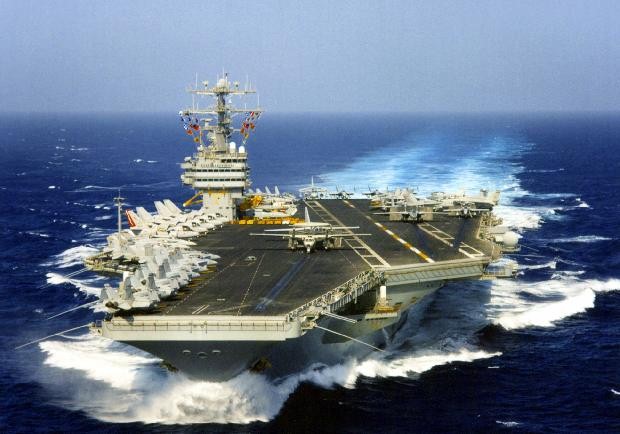
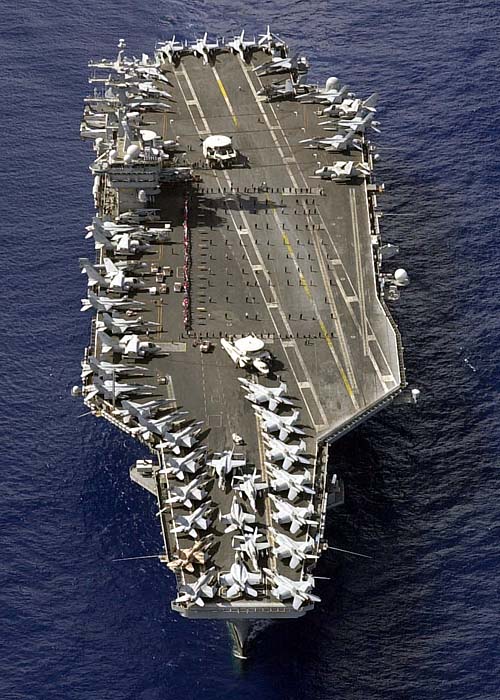
Post-war, carriers grew larger and larger as jet aircraft were introduced. The US Navy adopted British innovations such as the angled flight deck and steam catapult, as well as their own innovations such as nuclear power. But unless you were fortunate enough to be a member of Congress or an Astronaut, the carriers were off limits to all but their crew. The aircraft carrier as a museum is a relatively new concept. The first one opened with the Yorktown in 1975. The Intrepid followed in 1982, and four more since 1992. The USS Midway museum is the newest of the United States carriers to be opened to the public. Since all of the US Navy CVN supercarriers are still active, none are open for tours. Perhaps the most unusual of the carrier museums is the Minsk. The second of the trouble-prone Kiev class of Soviet carriers, it was retired after less than 20 years at sea when its VSTOL aircraft were withdrawn from service. The Minsk went to Korea for scrapping, but was saved from the cutting torch by the Chinese. The Minsk is now open as a floating museum and casino. Rumor is that the Kiev may join the Minsk as a second Chinese museum and casino. Another former Soviet aircraft carrier, the larger Kuznetsov class Varyag, which was never completed, is under conversion to be a cruise ship. There was an effort to save the carrier USS Forrestal to be based in Baltimore as a museum. However, the fund raising fell short, and the project was not successful. As of 2010, it looks like the Forrestal will be sunk to become an artificial reef. US Aircraft Carrier Museums
US Aircraft Carrier Web Sites
World Aircraft Carrier Museums
Some Statistics On These Aircraft Carriers
|

|
Authored by John A. Weeks III, Copyright © 1996—2016, all rights reserved. For further information, contact: john@johnweeks.com
|