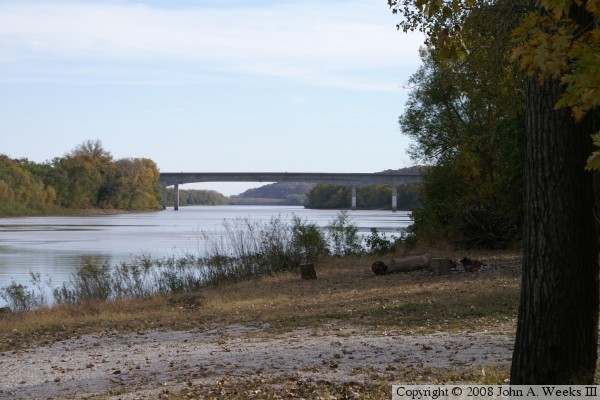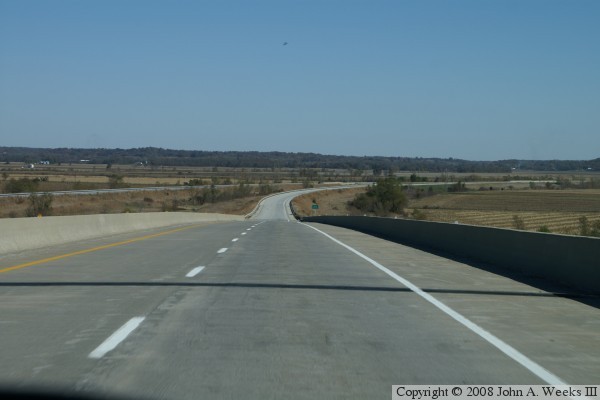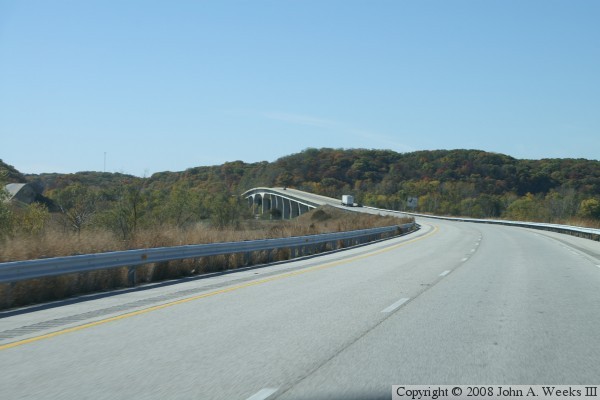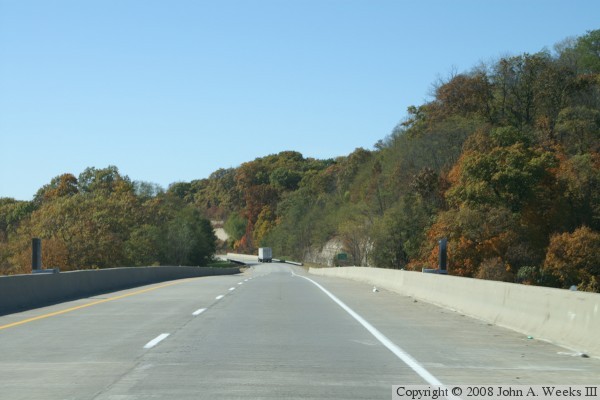
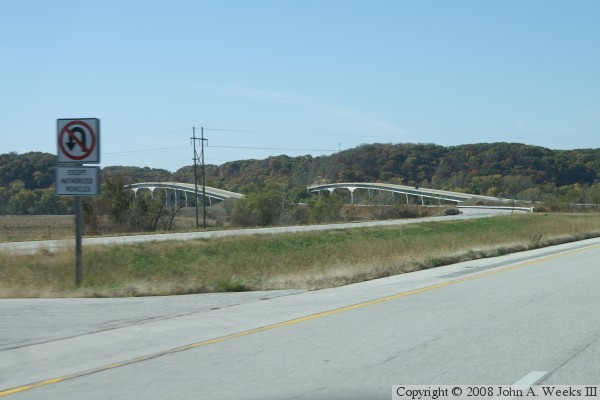
To appease the locals and improve regional transportation, Illinois DOT is upgrading the main highways through this area. One project is to upgrade US-67, which runs north and south. A project that is now completed is the Central Illinois Expressway, now called I-72. The expressway runs from Decatur in the middle of Illinois west to Hannibal, Missouri. The highway required two major bridges. The bridge over the Mississippi River is called the Mark Twain Bridge, and it opened in 2000. The other is the Valley City Eagle Bridges, twin spans over the Illinois River. While people have heard of Hannibal, Valley City is less known. In fact, it is the smallest city in Illinois.
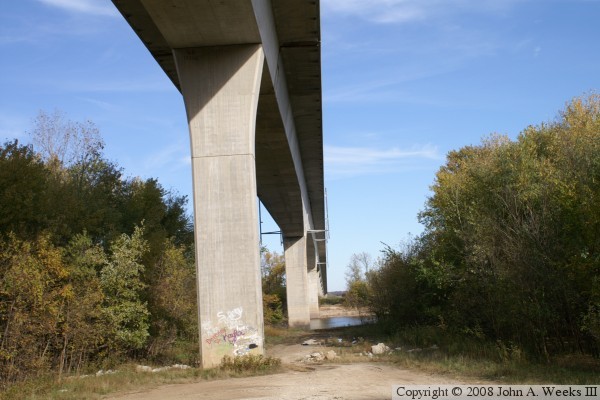
The two spans of the Valley City Eagle Bridges were built in 1988, but the highway itself was not fully finished until 1991. Prior to that time, US-36 was routed across the Florence Bridge a few miles south of the I-72 river crossing. The bridges are anchored to the flat river plain on the east side of the Illinois River, and land high in the bluffs on the west side of the river, gaining about 80 feet in altitude as part of the river crossing.
The bridges were built with three relatively new construction techniques. First, the main bridge spans were cast in place using a moving concrete form. Workers would cast one section of the bridge in place, then move the forms ahead a few feet and cast the next section. The trick here is to keep the two spans on either side of a bridge pier equally balanced until adjacent section connect to form a single span. This eliminates the need for extensive falsework. A second interesting technique is that once the bridge spans were completed, cables were run from end to end, and the cables were stretched very tight. This pulled the bridge ends towards the middle, making the bridge much stronger. Finally, the approach spans were cast in forms that were set up at ground level. Once the spans were ready, the were lifted by cables and strand jacks up to the top of the bridge piers.