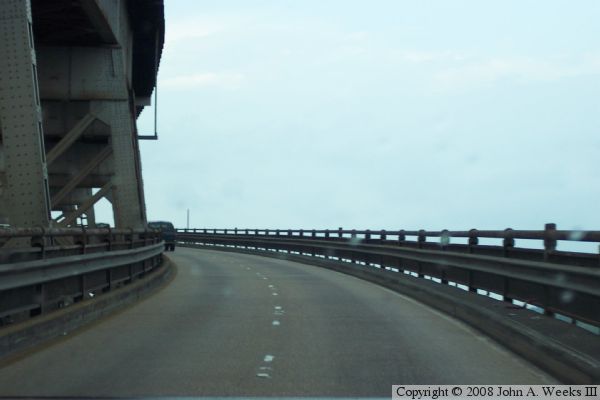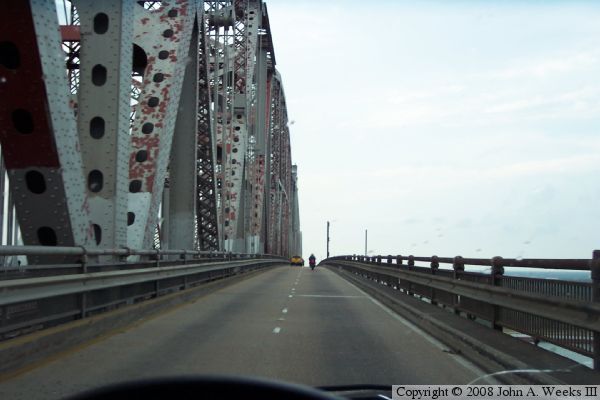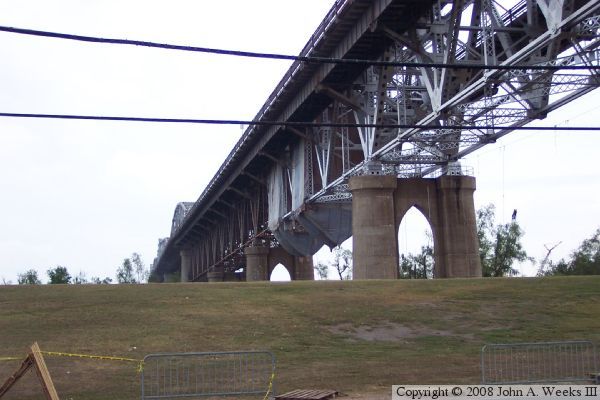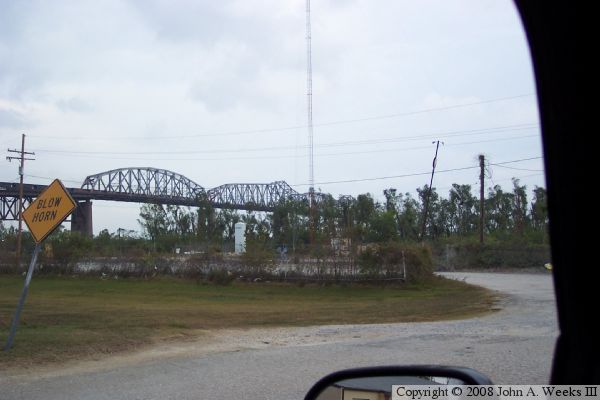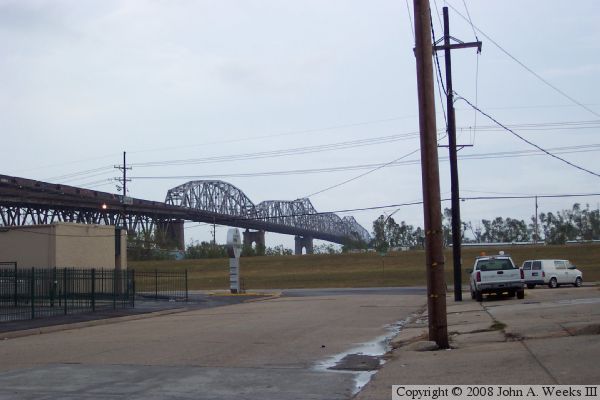
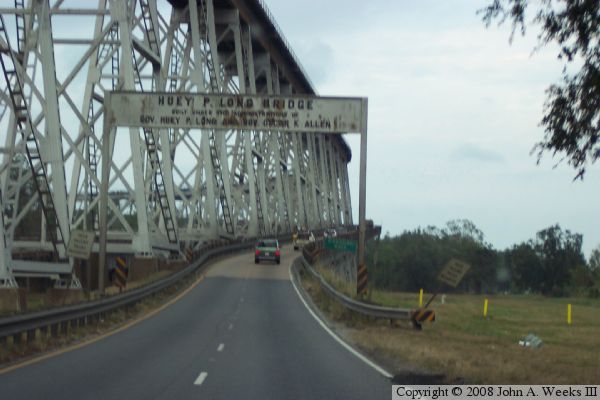
It is hard to grasp how big this metal monster really is. The deck is flat to accommodate rail traffic, whereas high bridges like this normally have a hump shape. As a result, the highway ramps go up-hill at a rather strong grade, while the railroad approaches are much more gradual, and extend miles to each side of the river crossing. The piers are equally massive, but much of that structure is below water. Given that New Orleans is built on silt, bedrock doesn't begin until you dig down over 1,000 feet below the riverbed. That makes it impractical to use bedrock for the base of the bridge pier foundations. Instead, the piers depend on their size and mass to stay in place.
The Huey P. Long Bridge has been rated as ‘unacceptable’ and has been high on the priority list for replacement for many years. A project to rebuild the bridge in place was started in 2005. The plan is to first build the existing piers wider to support a wider bridge. Then the traffic decks will be removed, and new truss structures will be built parallel to the existing truss structure supported by the newly widened piers. These new trusses will each carry 3 lanes of traffic. New approach roads will be built to carry the wider highway to the new truss spans. The entire project is expected to be completed in 2013.
Note that there are two bridges over the Mississippi River in Louisiana that are named after Huey P. Long, longtime governor of that state. The other Huey P. Long Bridge is a very similarly configured structure carrying US-190 over the river at Baton Rouge.
The photos above and below are the first two photos of a three photo set showing views from the traffic lanes heading northwest into New Orleans on US-90. The photo below is the entrance ramp to the bridge from Bridge City, Louisiana. The rail line cannot climb the same grades as motor vehicles, so the railroad tracks are high overhead. The photo below is a sweeping curve on the very narrow traffic lanes as we continue to climb towards the level of the railroad tracks and the main truss structure.