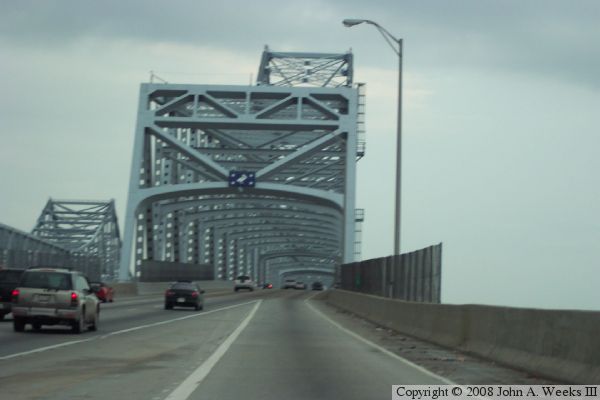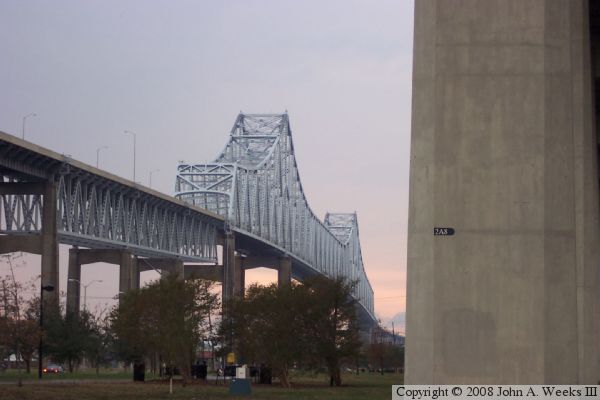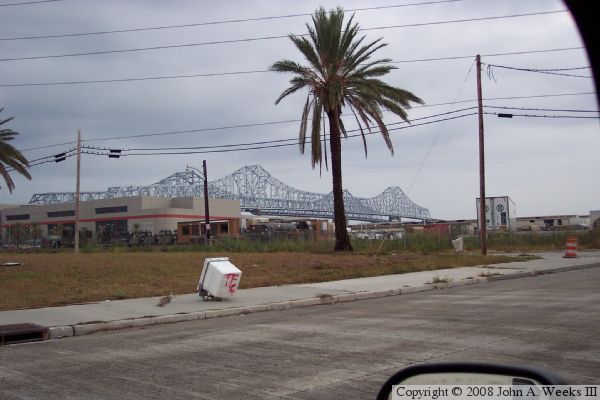

The older bridge span was named the Greater New Orleans Bridge when built. The newer bridge span was initially called the Greater New Orleans Bridge #2. The Louisiana DOT held a contest to name the bridges. The Louisiana state legislature officially adopted the Crescent City Connection name in 1989. The bridge name refers to the crescent shaped curve in the Mississippi River as it flows past the heart of central New Orleans.
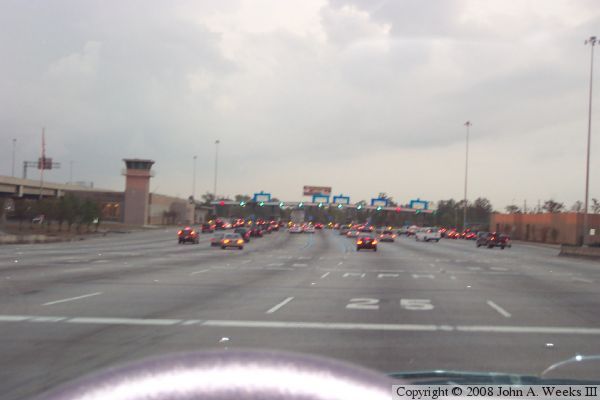
The bridges are currently configured with 4 lanes in each direction, plus 2 HOV lanes. The older span has 4 lanes heading southbound out of New Orleans. The newer span has 4 lanes heading northbound into New Orleans, plus 2 reversible HOV lanes. The northbound span has a toll of one dollar for a standard automobile, less for those with electronic toll tags. This is one of only two toll bridges remaining on the Mississippi River. These are the last bridges over the Mississippi River when heading south. The remaining four river crossings below these bridges are ferry boats.
This bridge complex is to be part of what Louisiana is calling I-49, an extension of the existing I-49 that is planned to loop through lower Louisiana and back into New Orleans from the south. Louisiana has been signing sections of this road as Future I-49. The state petitioned AASHTO to use the I-49 designation on the bridges and a freeway section south of New Orleans. AASHTO refused that request, but offered I-910 to be used until I-49 is completed. So far, I-910 signs have not been erected. The road is officially designated Business US-90.
A dark chapter for the Crescent City Connection bridges happened during the Hurricane Katrina disaster. Gretna Police Chief Arthur Lawson blocked the south end of these bridges to prevent the thirsty, starving, and dying people of New Orleans from sharing the stockpiles of supplies that were located in Gretna. Chief Lawson even fired machines guns at the crowd and turned dogs loose on people who had no food or water for days. Nearly 2,000 people died in the disaster, many less than 2,000 feet from safety. Since most of the citizens in distress were African-American, and Chief Lawson is white, many have accused Lawson of being a racist.
The photo above is looking north at the upriver face of the twin bridges as seen from the Gretna side of the river. The people camping on the left side of the photo were displaced by Hurricane Katrina. The photo below is a view looking west towards downtown New Orleans. Due to the river making a sweeping turn in this area, we are on the west bank of the river, but that happens to be the east end of the bridge at this location due to the water flowing the north. The river makes a sharp turn just north of this location and heads south again.