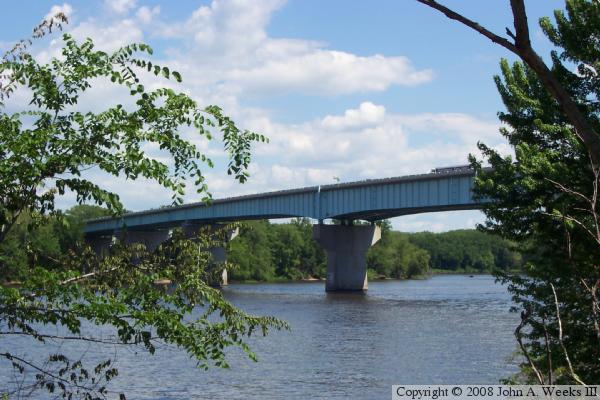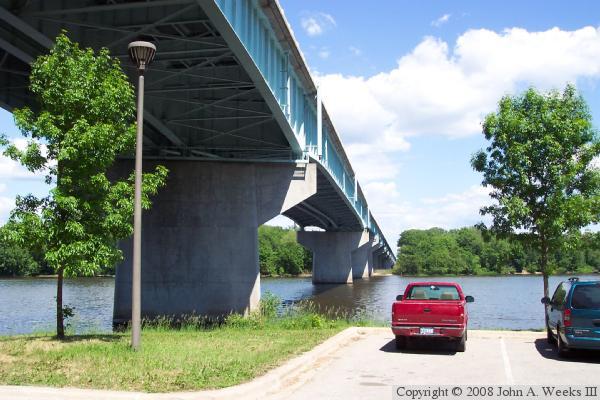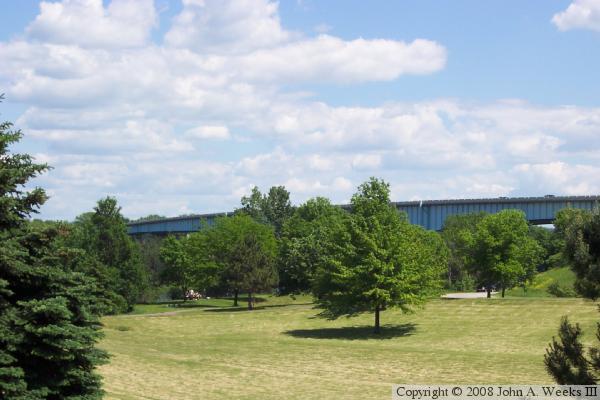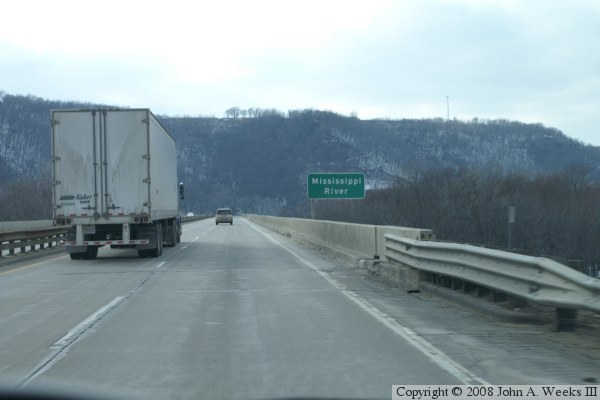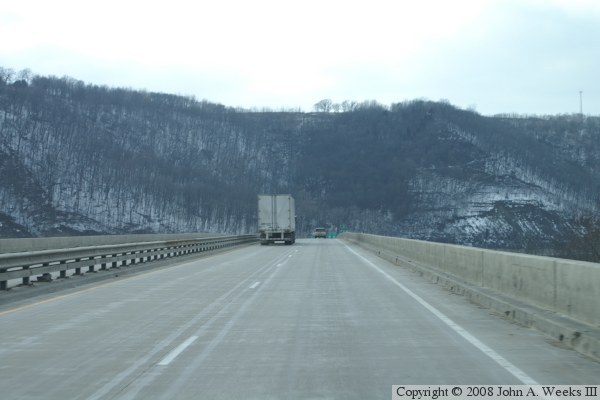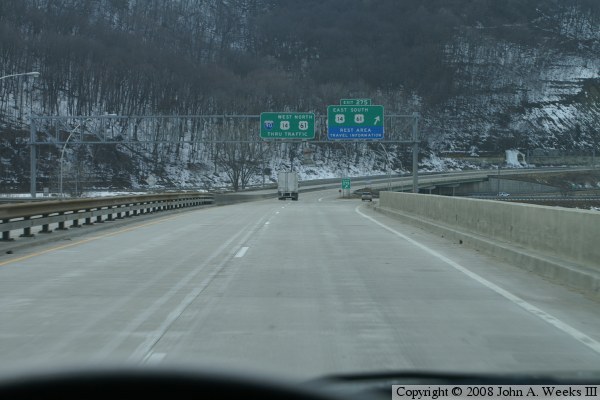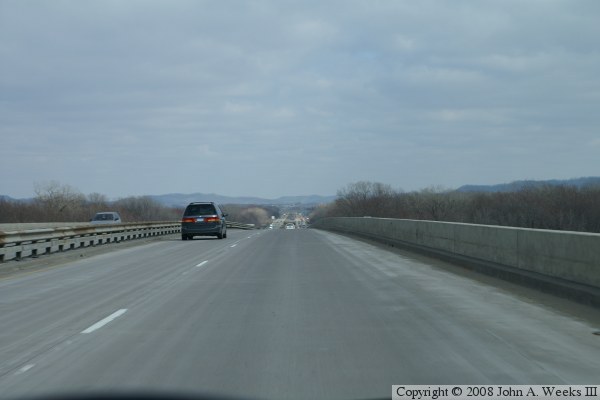
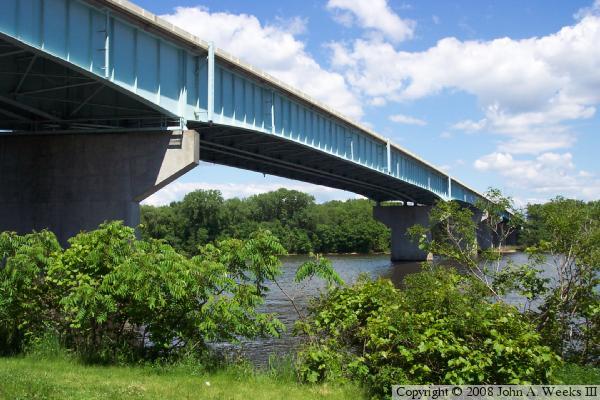
The river crossing at La Crosse is nothing short of amazing. The Black River joins the Mississippi River just south of this crossing. The result is a large number of channels, sloughs, wetlands, and lakes. The river itself is over 3 miles wide, and I-90 has several smaller bridges leading up to this span over the main channel. The I-90 bridge is the start of one of the most scenic sections of the Great River Road between La Crosse and Winona. The only other part of the Great River Road that can rival this section is the Palisades area just north of Alton, IL.
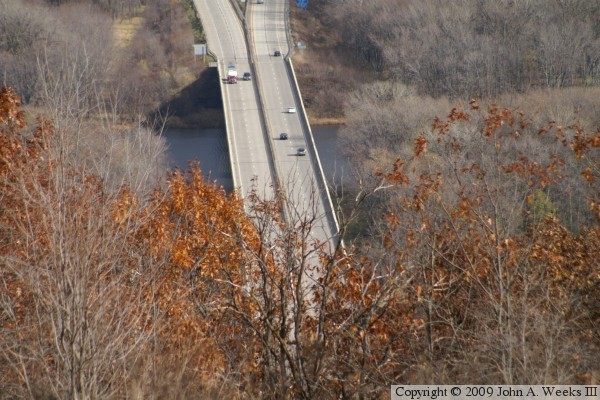
The Dresbach Bridge has a number of problems. First, it is a very narrow bridge for being a major freeway river crossing. The outside shoulders are only 3-1/2 feet wide, and the inside shoulders are only 2 feet wide. There is no room for a stalled vehicle to park, nor is there room for emergency vehicles to reach the scene of accidents. Second, the bridge has a very sharp corner on the Minnesota end of the crossing. Third, there are a number of very busy exit and entrance ramps near this sharp corner, one that routes US-14 and US-61 into the city, and another that serves a very popular rest area and riverside park. Finally, the bridge is built with a non-redundant design. That is, if any one of the major structural steel members fails, the entire bridge is likely to collapse. That is not good, rather, a bridge should be able to survive the loss of any one beam or brace.
MN-DOT has been leading a study of alternatives to upgrade the Dresbach Bridge. All of the alternatives feature a wider bridge and extensive interchange work on the west end of the river crossing. One alternative suggests a twin bridge, another widening the existing bridge, while yet another suggests a new cable stayed bridge. Price estimates are in the $50-million to $100-million range. The desire to replace bridge picked up speed following the I-35W bridge disaster, which brought the problem of fracture-critical bridges to the forefront.
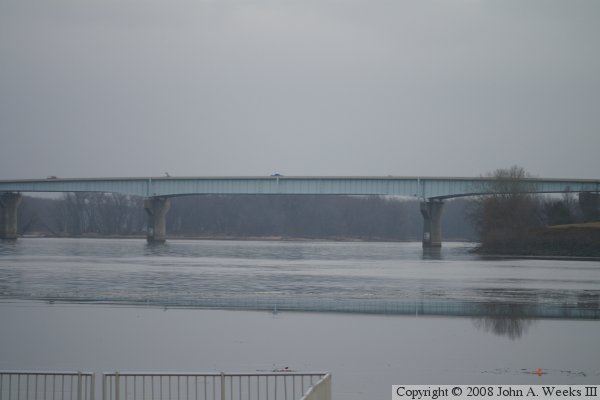
The photo at the top of the page is taken from the boat landing on the Minnesota side of the river, just below the highway rest area and just south of the bridge. The photo below was taken from the edge of the river near the rest area on the north side of the bridge. There is a lot of vegetation in this area, so you have to sneak photos in where ever you can.