A new bridge was built in 1965, with a 2nd parallel span added in 1976. That bridge has piers sitting in the water on the sides of the channel. A survey in 1980 revealed evidence of significant scouring. The channel has since grown from 28 feet deep to over 100 feet deep, and is in danger of undercutting the bridge piers. The Delaware DOT has been struggling to keep the bridge safe since that time.
A new bridge over the inlet was designed in the 2000s. It was to be a landmark bridge with a single reinforced concrete arch, a wide highway deck, and regional trail bridge suspended on cables. The bridge project started in 2005 with grading, approaches, and retaining walls. The bridge was designed so that it would land on gravel ramps built up to the edge of the inlet.
Once the new bridge work was underway, the bridge structure project was sent out to bid. The bids were expected to be in the $120-million range, but came back in the $200-million dollar range. There simply was not enough money in the budget to complete this bridge as designed. In addition, the US Army Corps of Engineers determined that the jetties were in danger of failing, and that could cause the inlet to widen considerably.
At that point, Delaware DOT had to go back to the drawing board. They proposed to recast the project as a design and build project. Using this method, vendors proposed to do both the bridge design and build the bridge to their design. The final vendor would be picked both on their skills in building bridges as well as the merits of the design. The winning design is a large cable stayed bridge. The low bid was $149-million, within a few dollars of the $150-million budget for the project.
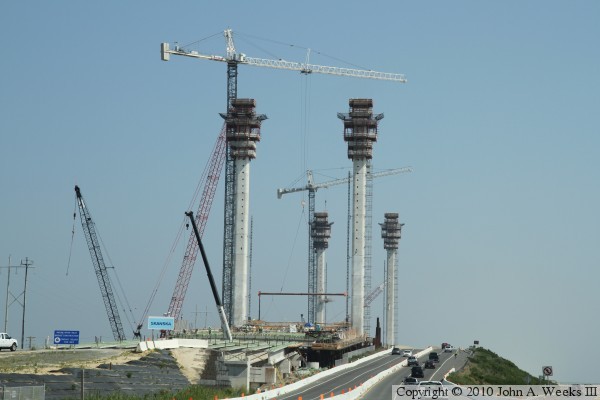
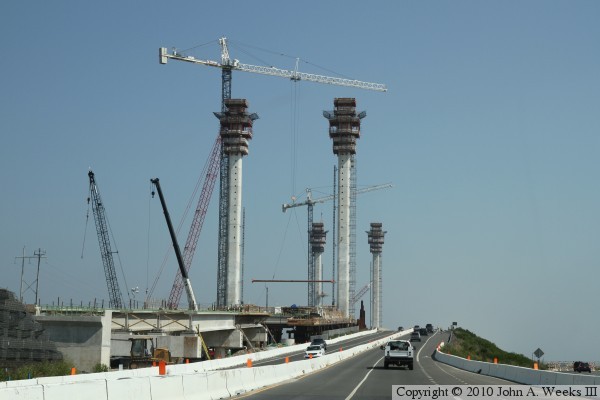
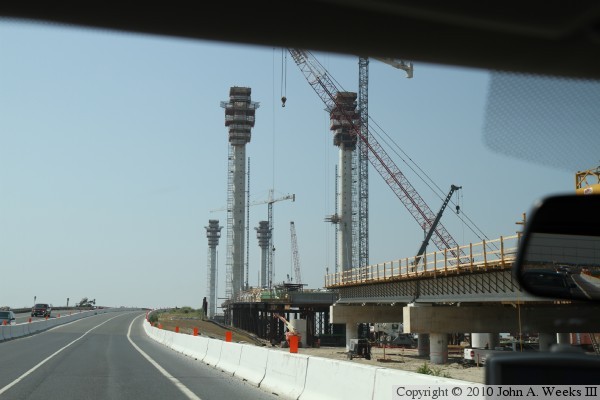
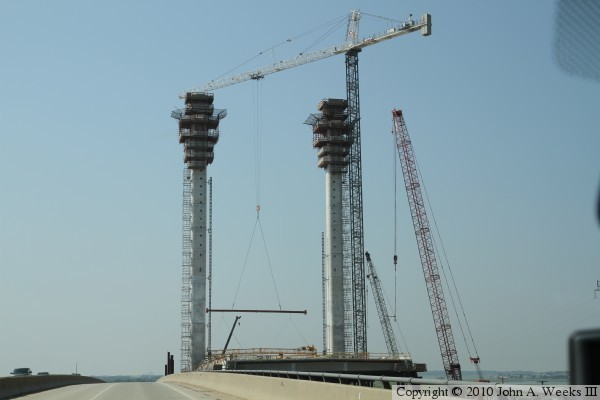
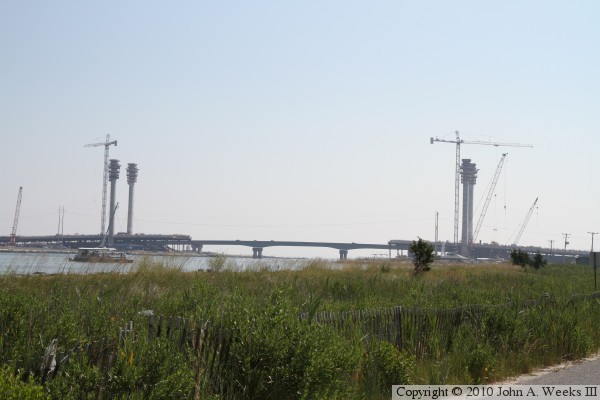
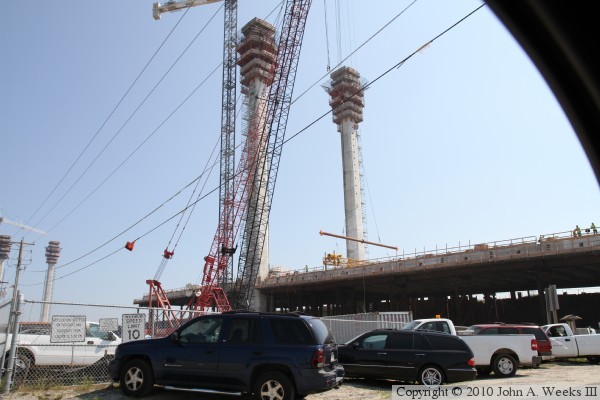
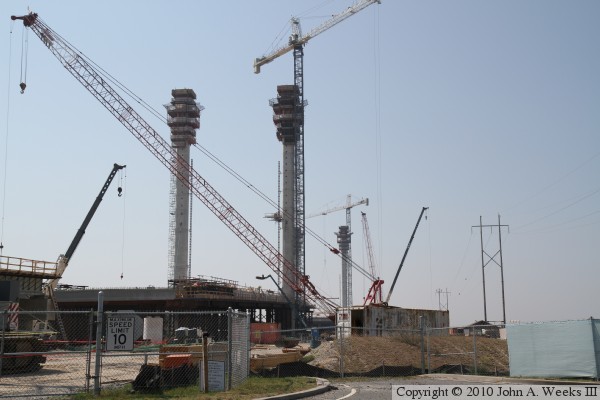
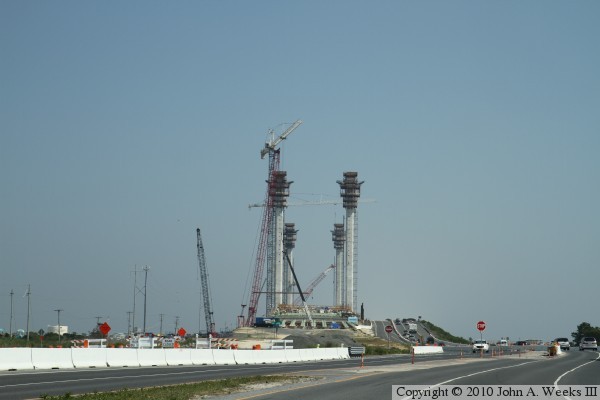
The new bridge will have 4 free-standing towers reaching 240 into the air, with 2 towers on each side of the inlet. Each tower will support one plane of cables, with two parallel cable planes in series supporting a 1,300 foot long main span. This puts 900 feet of the bridge over water, and 1,700 feet over land, more than enough distance to accommodate a wider inlet channel. The down side of the new design is that all of the work that Delaware DOT has invested in the project so far is no longer needed, and will have to be removed.
Update—A serious problem with a key piece of machinery known as a form traveler will delay the bridge opening nearly a year. The machine was built before final specs were known, and it is not strong enough to support the weight of the road segments. In addition, cracks have been found in some deck segments that have already been erected. Meanwhile, the existing highway bridge is close to failure due to erosion at the north approach. The bridge was closed for a period of time in November, 2011, for repairs.
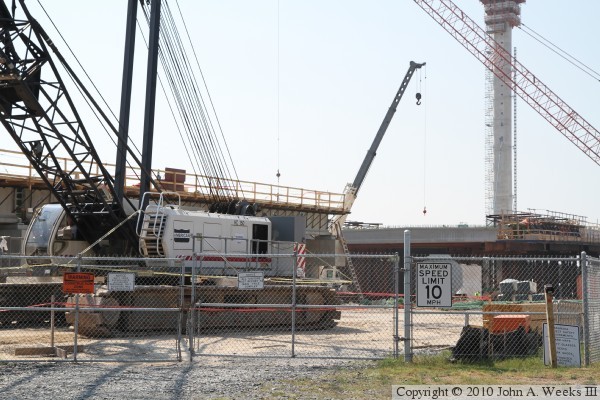
The photo above is a view of the bridge construction site as we approach the south end of the project traveling northbound on highway DE-1. These construction photos are from July, 2010. The main bridge towers have recently been completed, and work is underway to start attaching stay cables and hanging the segments that will make up the main bridge span.